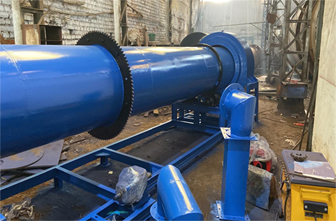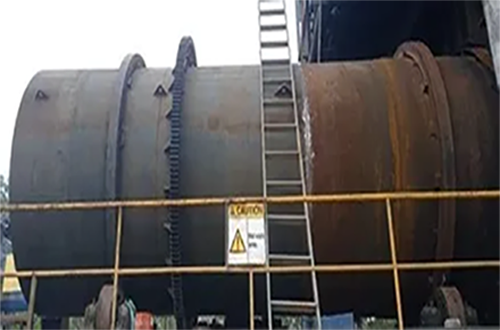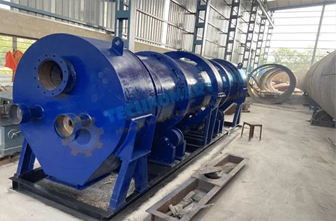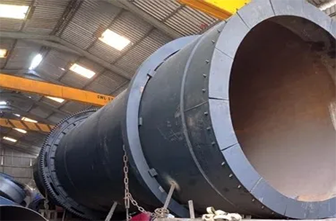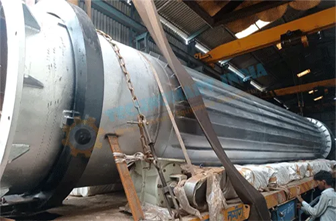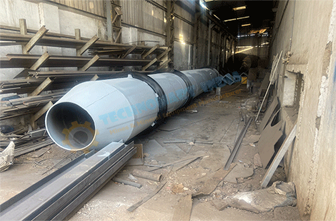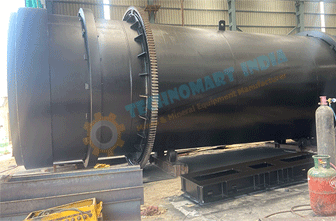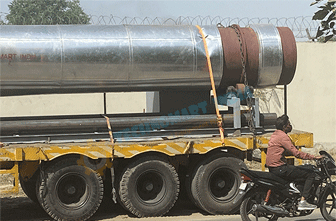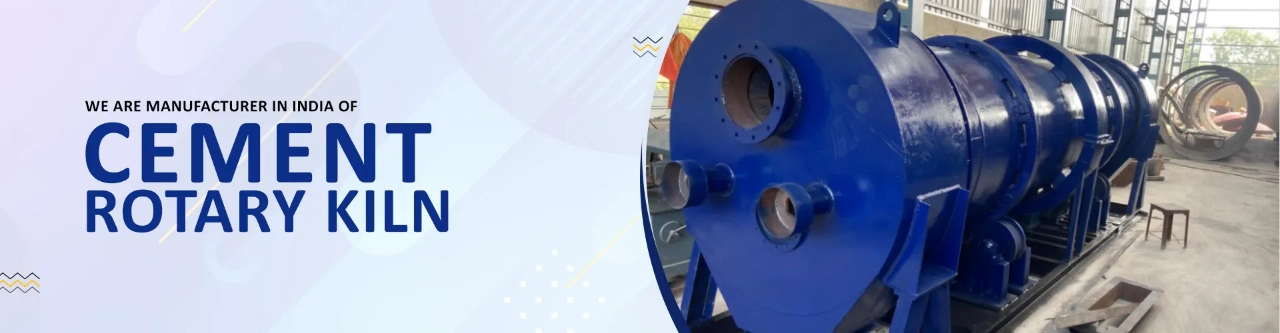
Where innovation meets combustion, Technomart India fuels your production with advanced rotary kiln solutions Based in Gujarat we are the biggest Rotary kiln manufacturer in India.
Technomart Engineers Pvt Ltd. mastery in constructing well-engineered kilns with more than 25 years of experience has placed us among the most trusted Rotary kiln manufacturer. Presenting our state-of-the-art rotary kilns crafted for unmatched efficiency, durability, and precision.
Designed to cater extreme temperatures of diverse industrial needs and ensure uniform heating with advanced automation, heavy-duty construction, and customizable structures, we provide solutions that increase productivity while lowering operating costs, also providing end-to-end solutions, from seamless installation to reliable after-sales support.
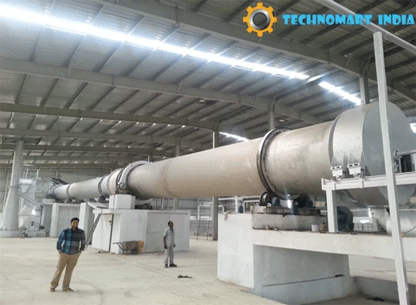

Our rotary kiln secures constant processing by holding an unchanging and evenly circulated heat profile throughout the chamber. This results in excellent product quality.

Made with high-grade materials, these kilns are planned for durability and can withstand intense industrial requirements, mechanical stress, and high temperatures without compromising performance.

Integrated with customized modern command systems, allowing detailed monitoring and automation. This improves functional efficiency, diminishes human error, and optimizes fuel consumption, making the whole operation more cost-effective.

Technomart presents tailor-made rotary kiln solutions to satisfy the exact conditions of various industries. Whether its size, heating mechanism, or material specifications, the kiln can be developed to fit individual production requirements.

Planned for minimal wear and tear, these kilns require less routine servicing and lower keeping expenditures. Their cutting-edge design decreases downtime, guaranteeing endless production and high trustworthiness.

Cement & Construction Industry
Lime & Mineral Processing
Metallurgical & Mining Industry
Chemical & Petrochemical Industry
Environmental & Waste Management
Agriculture & Food Processing
Glass & Ceramic Industry
Aerospace & Advanced Material Processing
Gypsum & Plaster Production

Raw materials are introduced at the start of the kiln through a conveyor. The kiln is slightly inclined (2–4 degrees), pushing materials downward due to gravity. The rotational movement (0.5–3 rpm) ensures continuous mixing and uniform exposure to heat.

Heat transfer plays a crucial role in material processing. A burner system at the discharge end generates extreme temperatures (up to 1450°C). The heat is circulated through conduction, convection, and radiation, ensuring the required heat for material processing or chemical reactions.
As the material circulates through the kiln, it experiences sequential chemical reactions in separate zones:

Moisture evaporates from raw materials.

Volatile compounds start to crack down.

The core processing phase where extreme temperatures trigger reactions like decomposition, sintering, or phase transformation.

The processed material slowly cools before departure to prevent thermal shock.

The processed product is discharged at the end of the kiln, where it is managed for further processing, storage, or packaging. Meanwhile, exhaust gases are directed through dust scrubbers to lower emissions and optimize power efficiency.
 14 Oct 2025 /
  By Admin
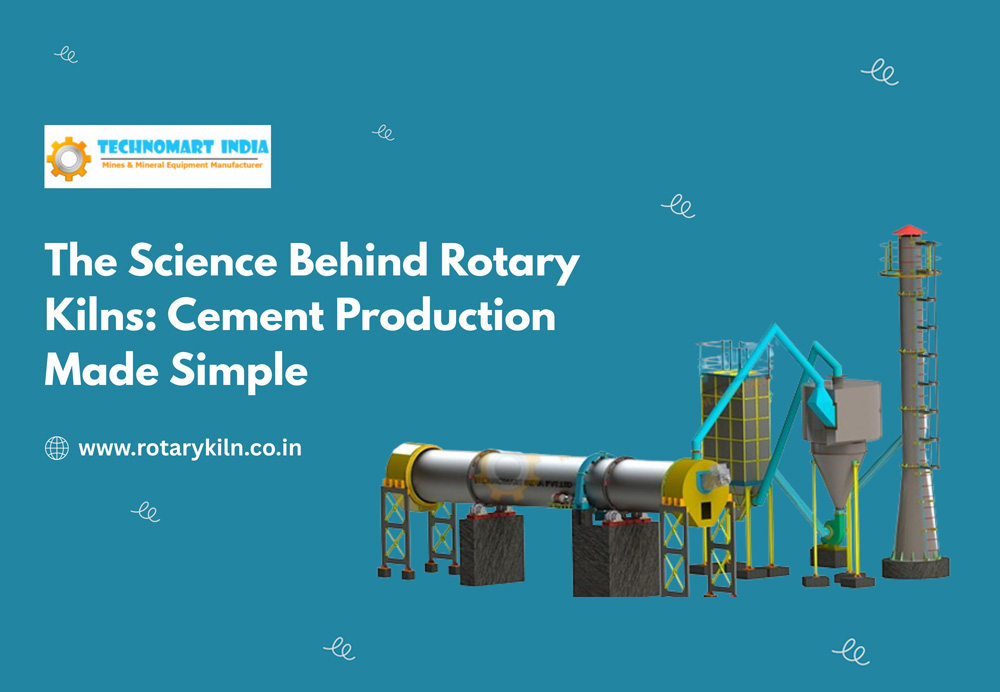
 Rotary kilns are central to cement production. These large, rotating cylindrical furnaces convert raw materials into clinker. The process is continuous, efficient, and precise. Understanding rotary kilns simplifies cement manufacturing.....
 04 Oct 2025 / By Admin
 A rotary kiln is a cylindrical furnace used for high-temperature processes. It rotates slowly, allowing raw materials or waste to be heated evenly. These kilns have a strong role in waste treatment, metallurgy, and cement manufacturing. .....
 18 Sep 2025 / By Admin
 Cement is the foundation of infrastructure in both urban and rural areas. While large rotary kilns dominate big cement plants, vertical shaft kiln (VSK) plants remain vital for rural regions. They provide affordable, localized cement production, ensuring that villages and small towns can access the material needed for housing, schools, and roads....